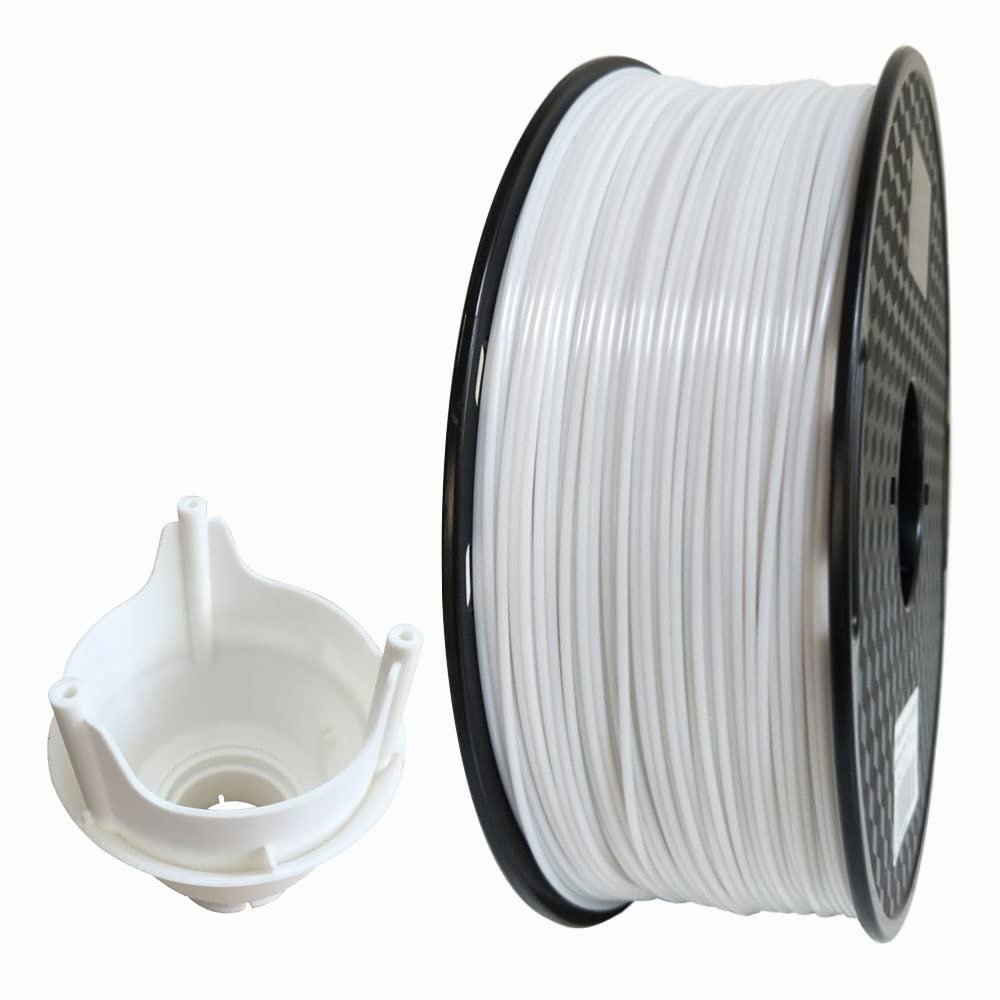
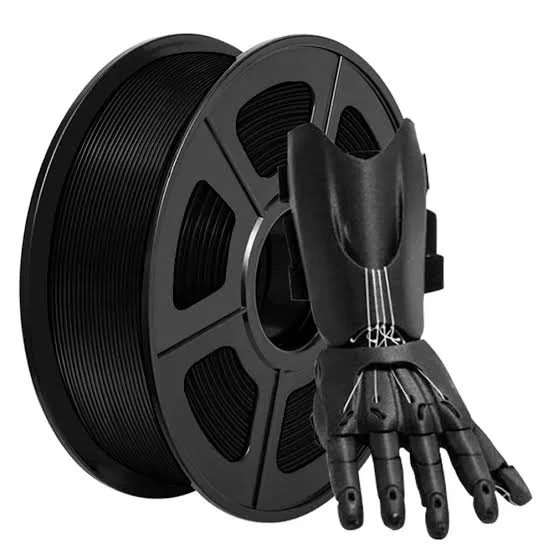
Wood‑PLA filament is a creative composite material that blends PLA with fine wood fibers, giving prints a natural, wood‑like appearance and even a subtle woody scent. It’s popular for decorative projects, artistic models, and furniture prototypes.
Base: PLA (easy to print, plant‑based).
Additive: Ground wood particles (often 20–40%).
Result: Prints that look and feel like carved wood, with a matte, grainy texture.
Glass transition temperature (Tg): 55–60 °C (softens at this point)
Melting temperature: 145–160 °C depending on grade
Nozzle temperature: 190–220 °C
Bed temperature: 0–60 °C (often prints fine without a heated bed)
Warping: Very low, even without an enclosure.
Ventilation: Minimal fumes compared to ABS, but ultrafine particles still exist—good airflow is recommended
Nozzle clogging: Wood fibers can jam small nozzles—use ≥0.4 mm, ideally 0.6 mm.
Strength: More brittle than standard PLA.
Abrasive: Can wear down brass nozzles; hardened steel is recommended.
Wood‑PLA filament is a creative composite material that blends PLA with fine wood fibers, giving prints a natural, wood‑like appearance and even a subtle woody scent. It’s popular for decorative projects, artistic models, and furniture prototypes.
Base: PLA (easy to print, plant‑based).
Additive: Ground wood particles (often 20–40%).
Result: Prints that look and feel like carved wood, with a matte, grainy texture.
Glass transition temperature (Tg): 55–60 °C (softens at this point)
Melting temperature: 145–160 °C depending on grade
Nozzle temperature: 190–220 °C
Bed temperature: 0–60 °C (often prints fine without a heated bed)
Warping: Very low, even without an enclosure.
Ventilation: Minimal fumes compared to ABS, but ultrafine particles still exist—good airflow is recommended
Nozzle clogging: Wood fibers can jam small nozzles—use ≥0.4 mm, ideally 0.6 mm.
Strength: More brittle than standard PLA.
Abrasive: Can wear down brass nozzles; hardened steel is recommended.