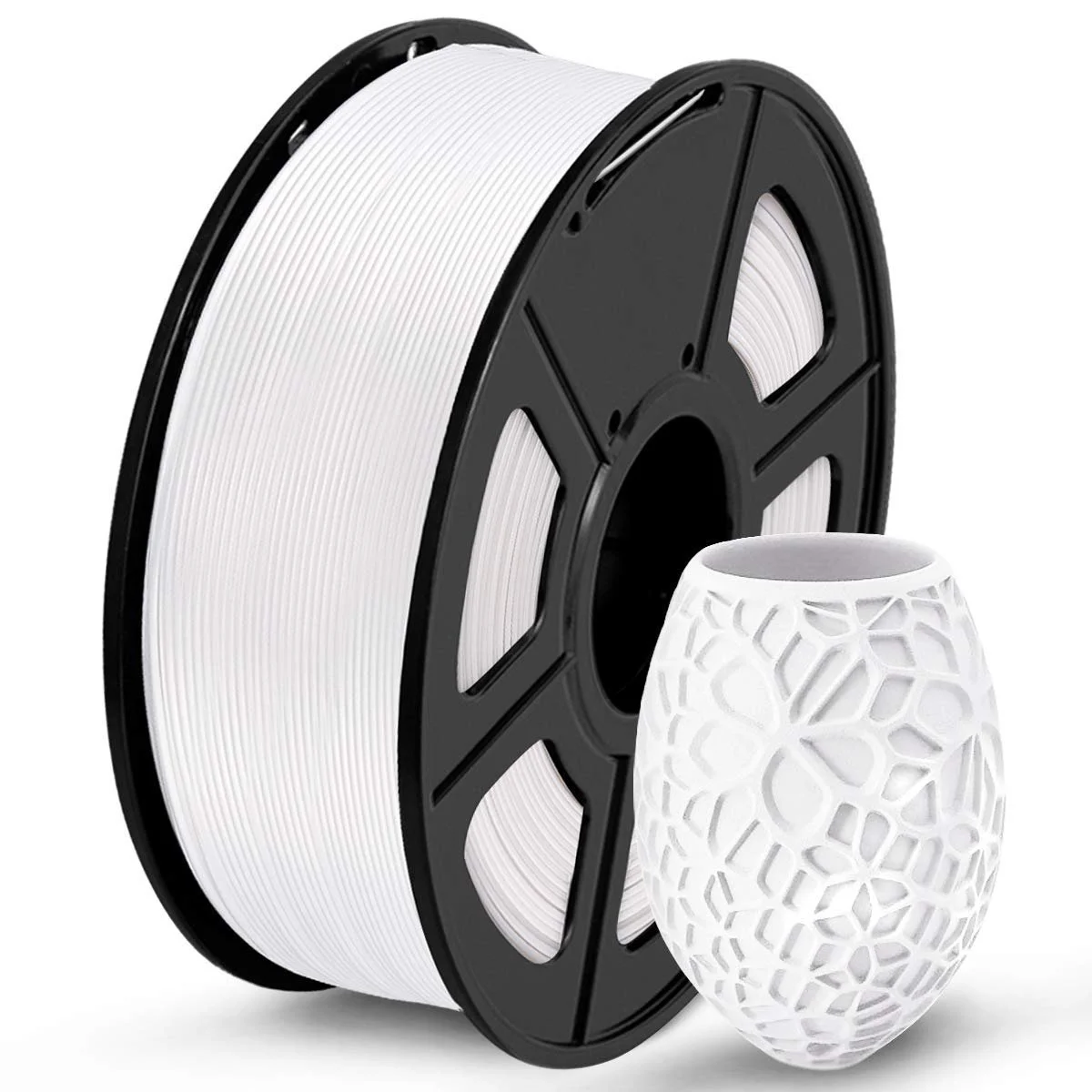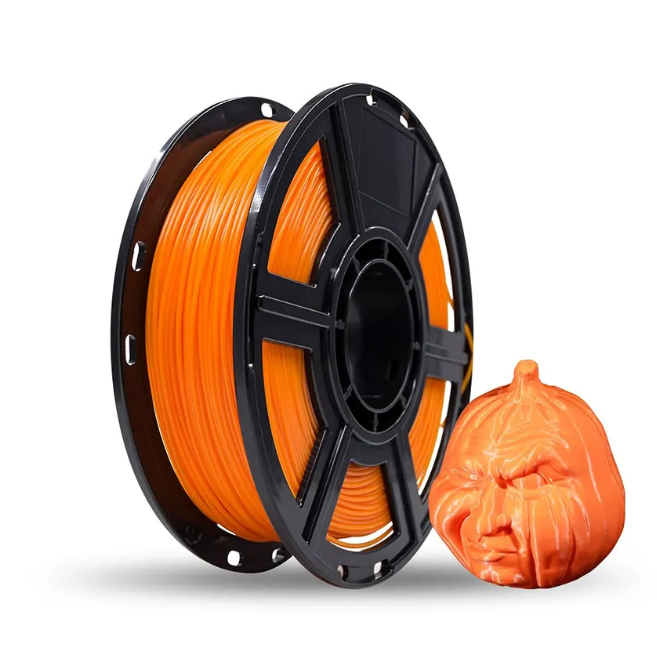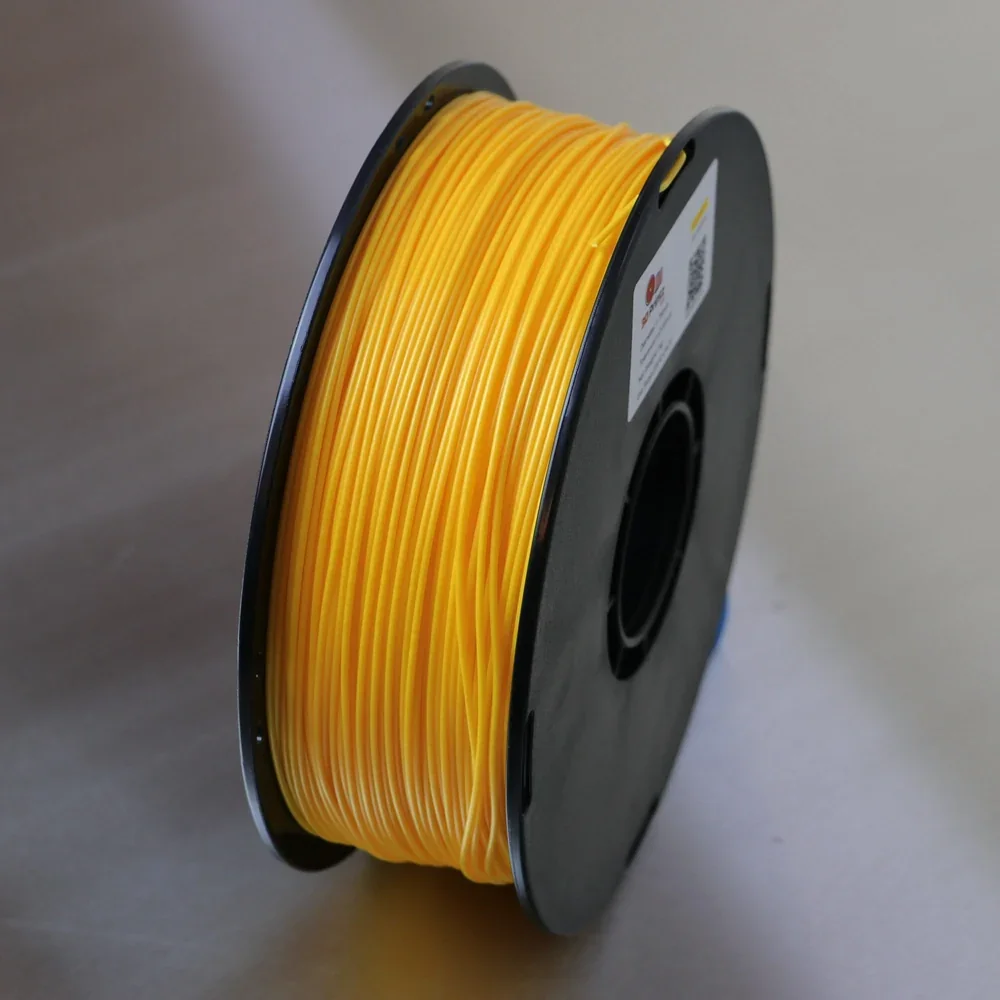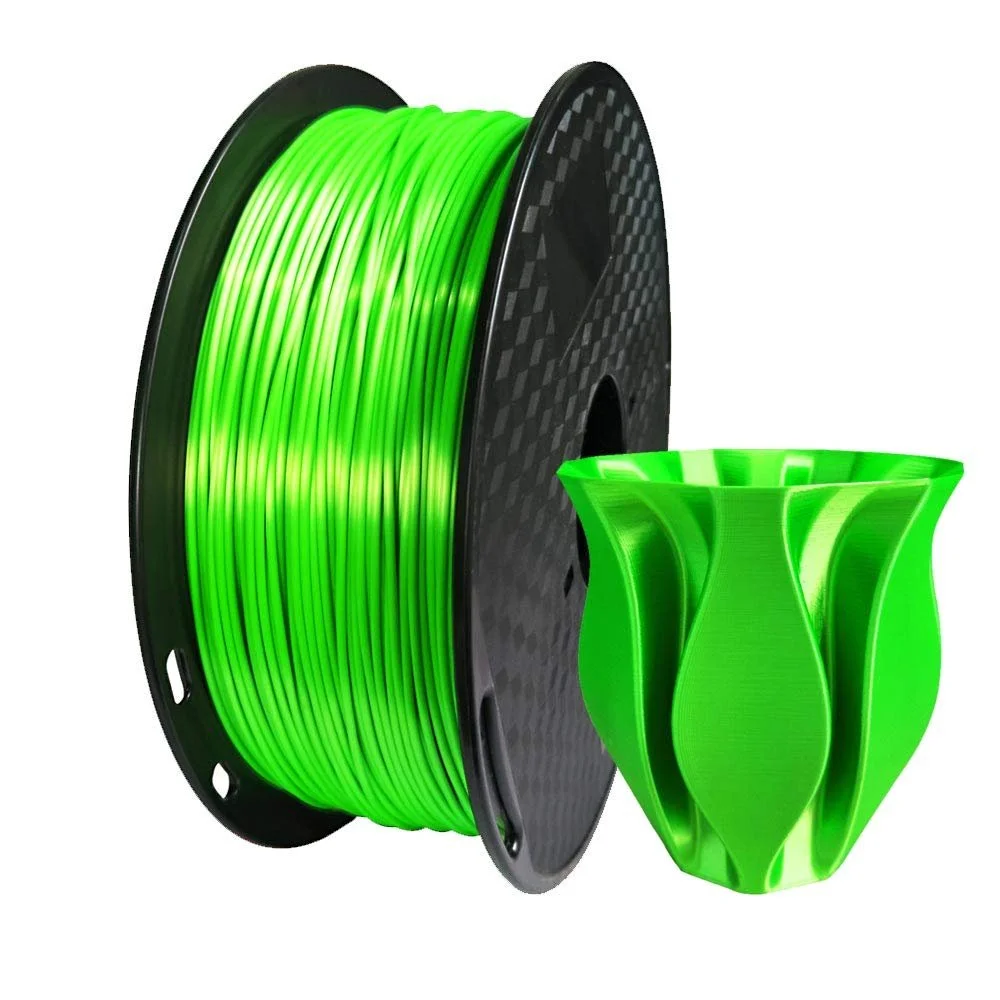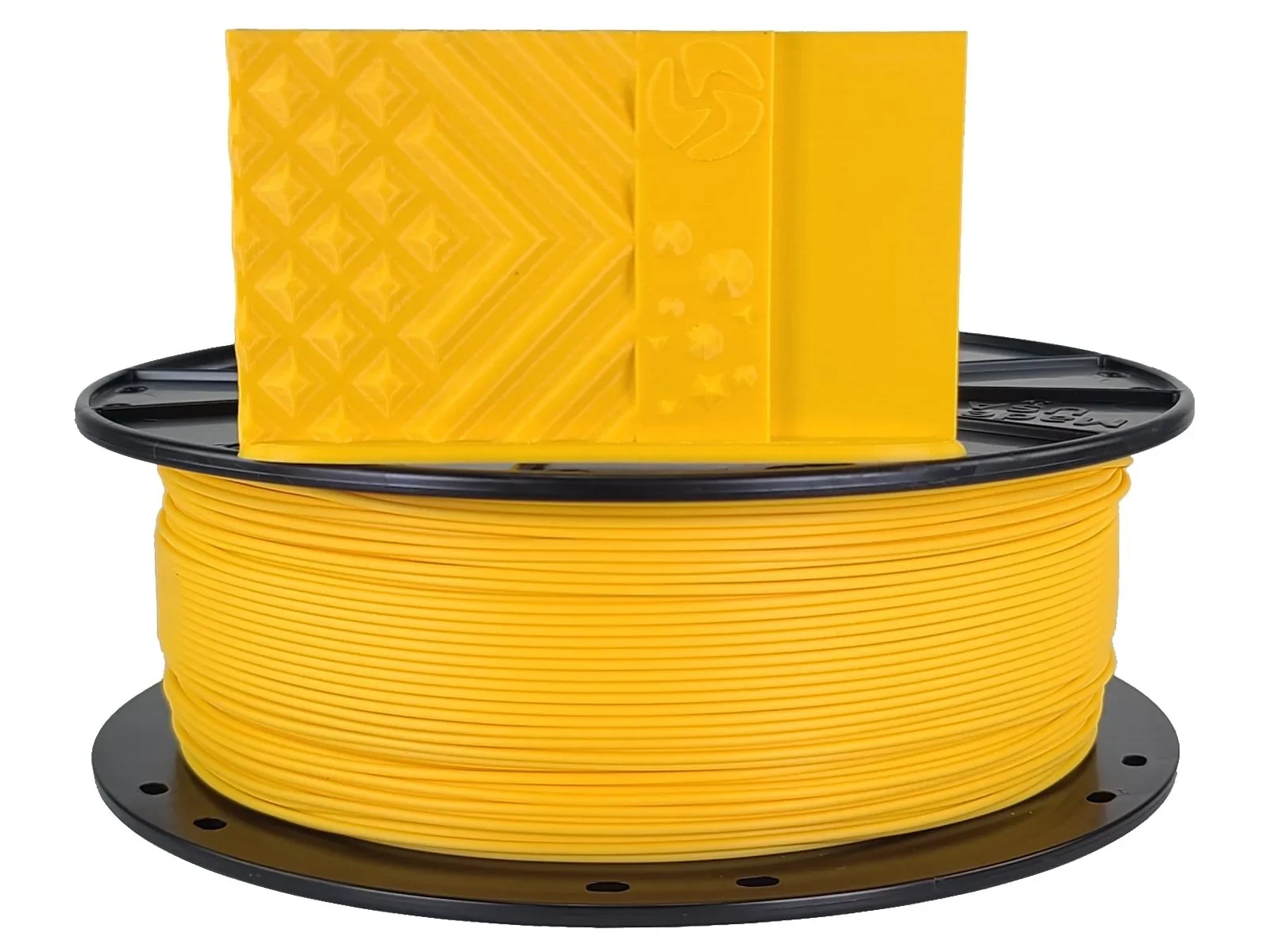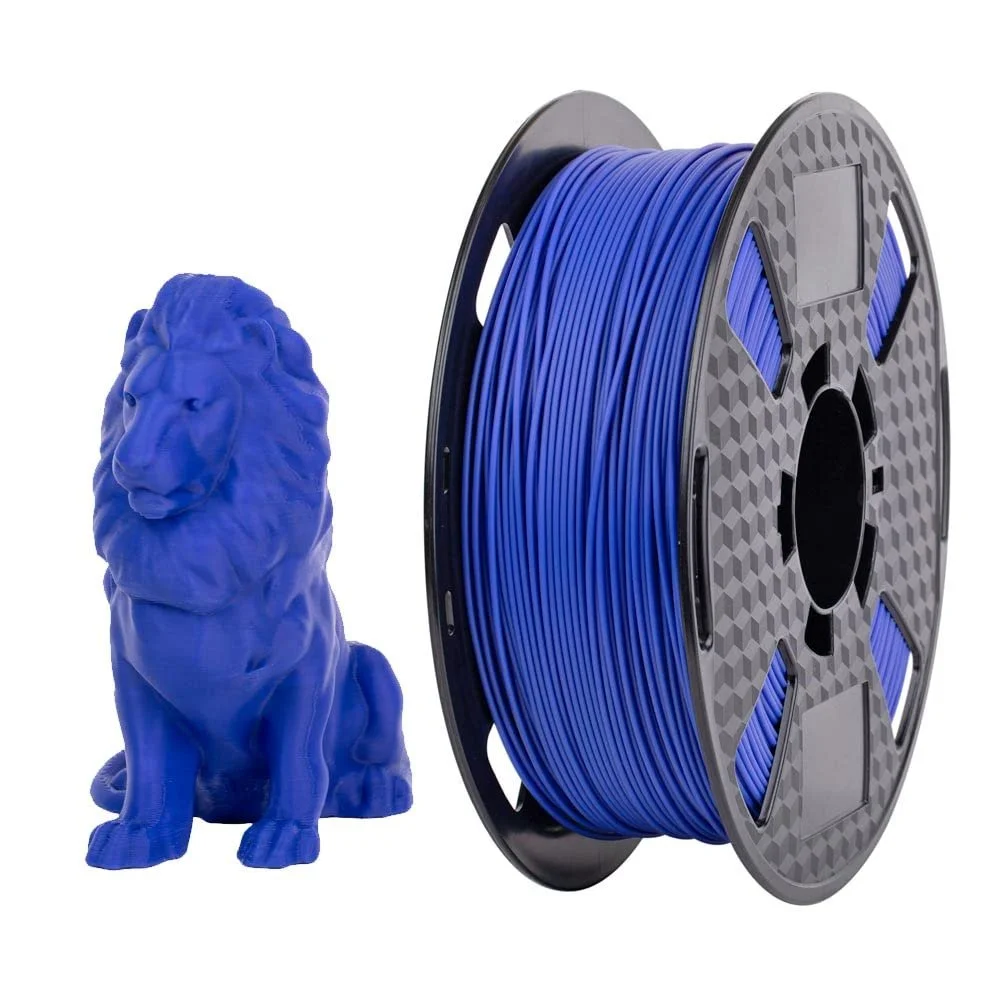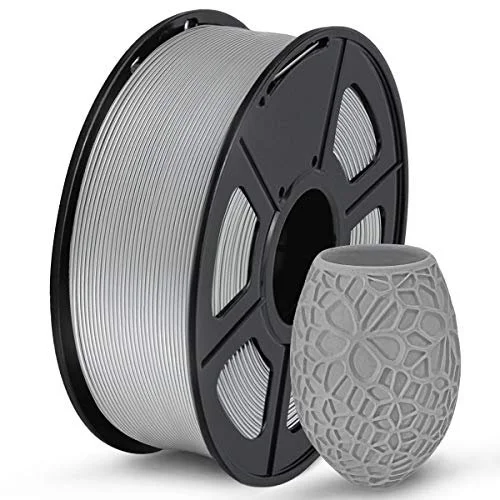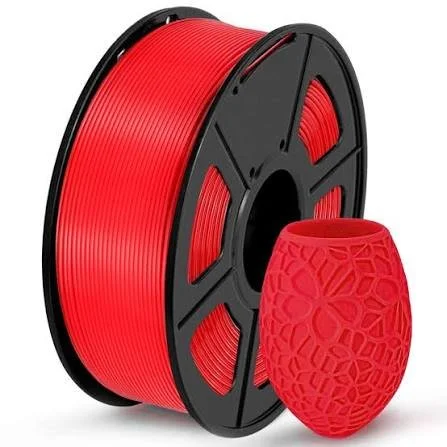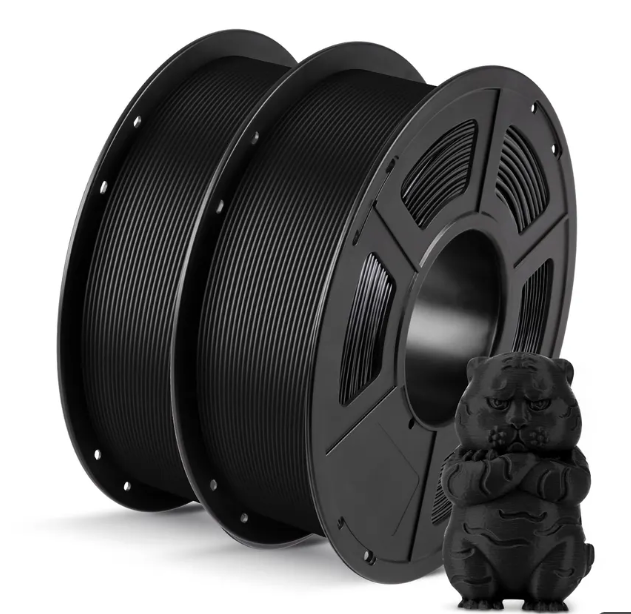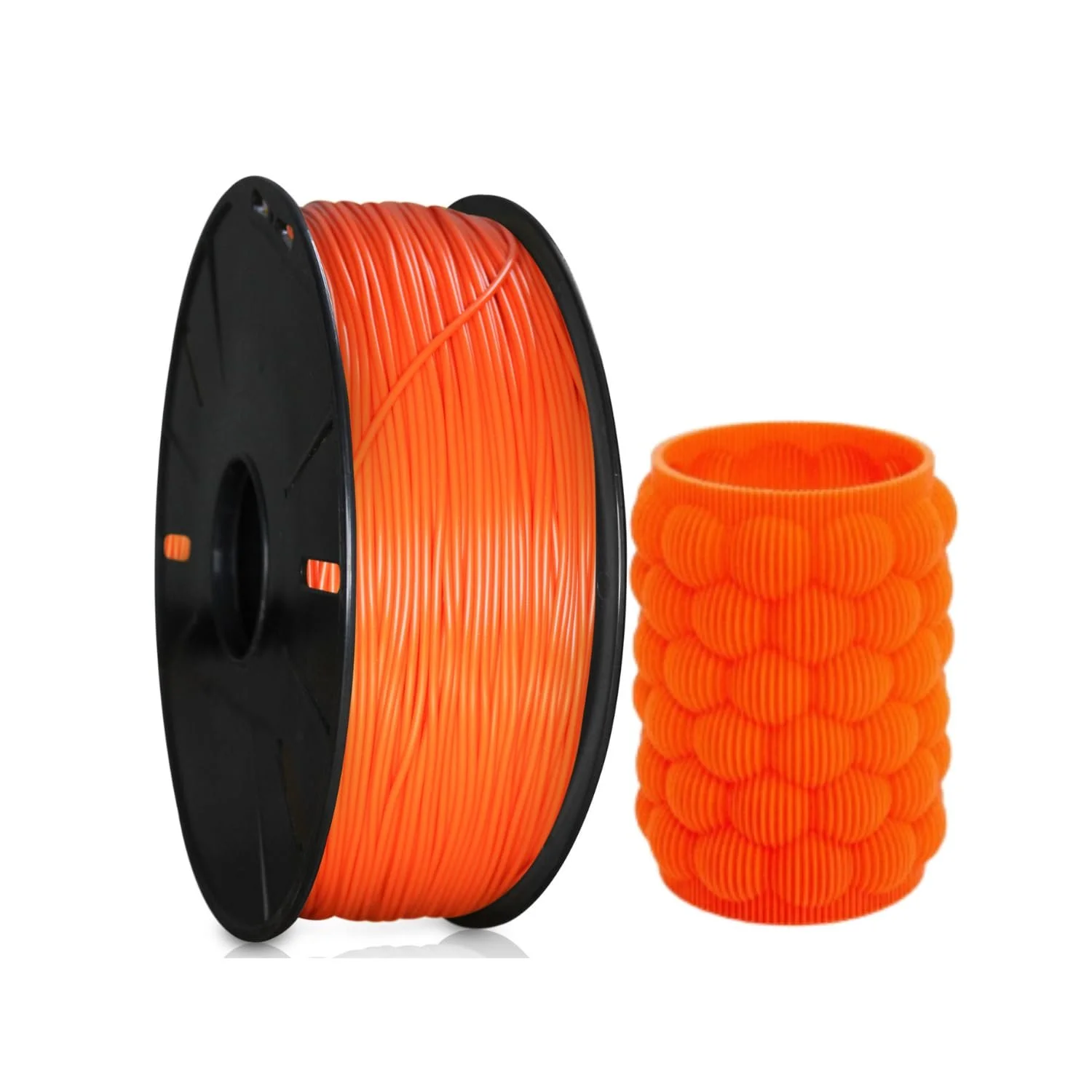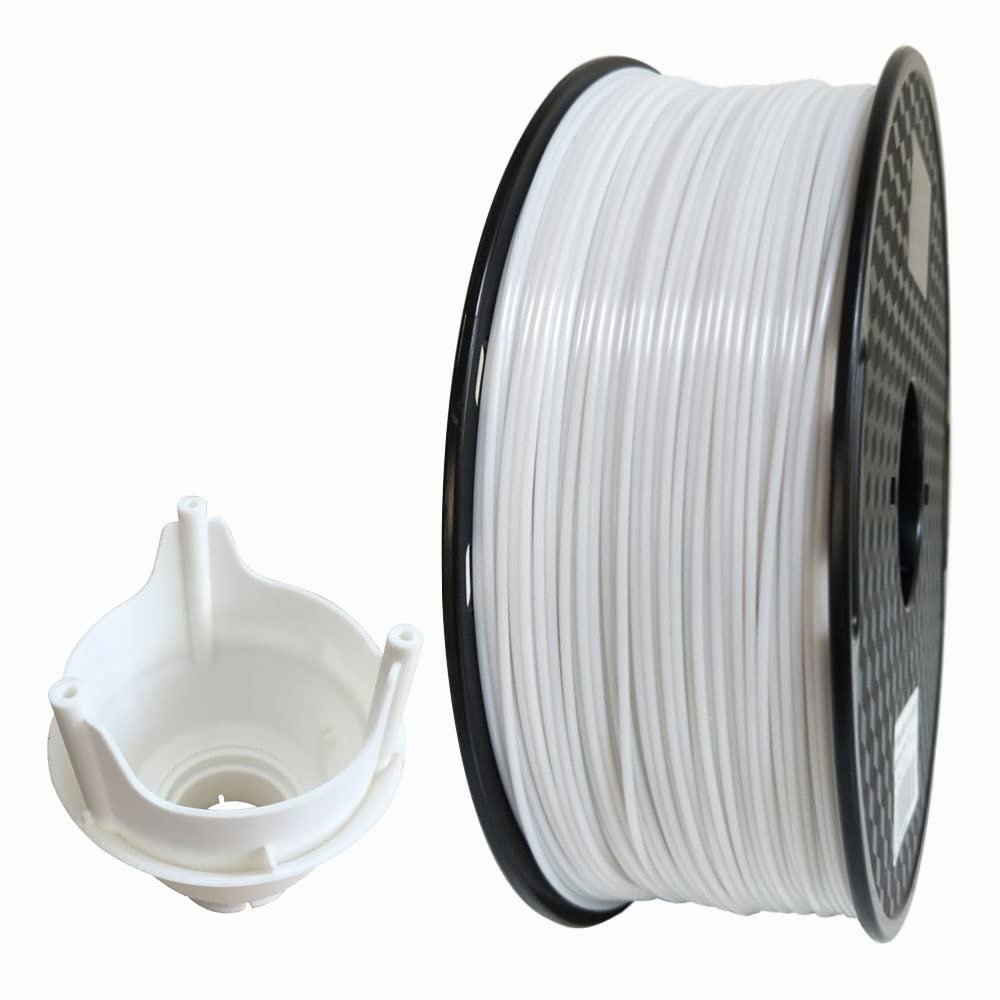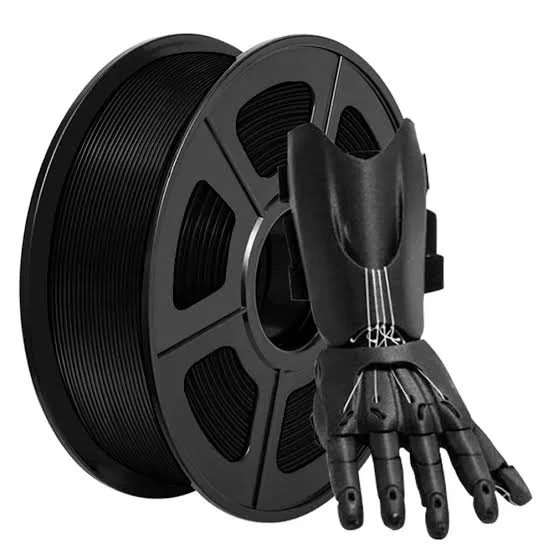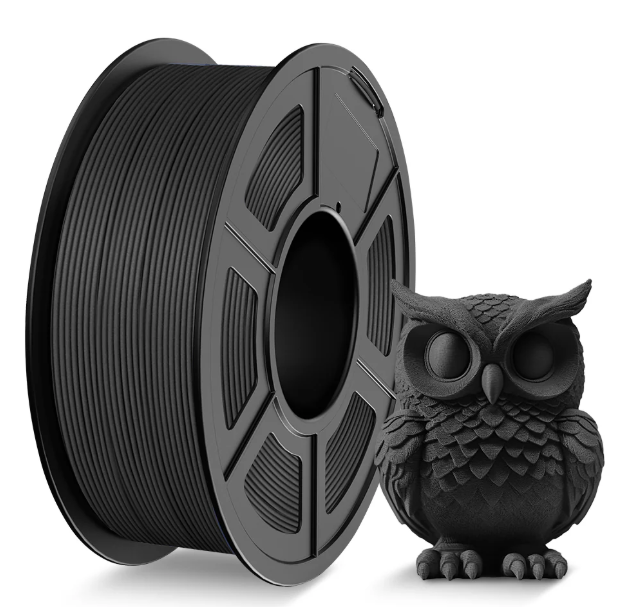
CF‑PLA filament is a specialty 3D printing material that blends PLA with carbon fiber particles, giving you a filament that’s stronger, stiffer, and more dimensionally stable than standard PLA. It’s popular among makers who want the ease of PLA but with enhanced mechanical properties.
Base: PLA (Polylactic Acid)
High stiffness: Parts feel more rigid and less flexible than plain PLA.
Matte finish: Attractive, professional‑looking surface with reduced layer visibility.
Lightweight: Carbon fibers lower density compared to pure PLA.
Additive: Short carbon fiber strands (usually chopped, not continuous)
Result: A composite filament with improved rigidity, reduced warping, and a matte, textured finish.
Glass transition temperature (Tg): 55–60 °C (softens at this point)
Melting temperature: 145–160 °C depending on grade
Nozzle temperature: 190–220 °C
Bed temperature: 0–60 °C (often prints fine without a heated bed)
Warping: Very low, even without an enclosure.
Ventilation: Minimal fumes compared to ABS, but ultrafine particles still exist—good airflow is recommended
Nozzle wear: Abrasive carbon fibers quickly erode brass nozzles—use hardened steel or ruby tips.
Brittleness: Strong but less impact‑resistant; can snap under stress.
CF‑PLA filament is a specialty 3D printing material that blends PLA with carbon fiber particles, giving you a filament that’s stronger, stiffer, and more dimensionally stable than standard PLA. It’s popular among makers who want the ease of PLA but with enhanced mechanical properties.
Base: PLA (Polylactic Acid)
High stiffness: Parts feel more rigid and less flexible than plain PLA.
Matte finish: Attractive, professional‑looking surface with reduced layer visibility.
Lightweight: Carbon fibers lower density compared to pure PLA.
Additive: Short carbon fiber strands (usually chopped, not continuous)
Result: A composite filament with improved rigidity, reduced warping, and a matte, textured finish.
Glass transition temperature (Tg): 55–60 °C (softens at this point)
Melting temperature: 145–160 °C depending on grade
Nozzle temperature: 190–220 °C
Bed temperature: 0–60 °C (often prints fine without a heated bed)
Warping: Very low, even without an enclosure.
Ventilation: Minimal fumes compared to ABS, but ultrafine particles still exist—good airflow is recommended
Nozzle wear: Abrasive carbon fibers quickly erode brass nozzles—use hardened steel or ruby tips.
Brittleness: Strong but less impact‑resistant; can snap under stress.